

My name is Diane Whitfield. I'm 54, I work as a home care provider around Spokane, Washington, and I have spent more nights than I can count falling asleep with my hair still damp and my face pressed hard into whatever pillow was closest. Six months ago I bought a Ravmix 100% mulberry silk pillowcase after a client, a retired hairdresser in her seventies, told me flatly that my cotton pillowcases were doing more damage to my hair and face than any cream I was using could undo. I was curious enough to order one and sleep on it every night for half a year before writing anything down.
I'd noticed, around my early fifties, that I was waking up most mornings with a deep crease running from my cheekbone down toward my jaw on whichever side I'd slept on, and it would take a good hour or two to fully fade. My hair had also gotten drier and more prone to tangling overnight, the kind of frizz that no amount of leave-in conditioner seemed to fix once I actually got up and looked in the mirror. I wanted to see if a twenty dollar pillowcase could genuinely change either of those things, or if this was just another product riding on a trend.
The Quick Verdict
A simple, low-effort swap that measurably softened my morning sleep creases and cut down hair frizz within the first month, though it does require gentler washing than a regular pillowcase.
Amazon Check Today's Price →Still Waking Up With a Crease Line Down Your Cheek?
I spent years blaming my skin for something my pillowcase was making worse. If you want to see current availability and pricing on the Ravmix silk pillowcase before I walk you through six months of actually sleeping on it, here's where I check it.
Amazon Check Today's Price on Amazon →How I've Used It
I put the Ravmix pillowcase on my main sleeping pillow the night it arrived and never went back to my old cotton one on that pillow again. My husband still sleeps on cotton on his side of the bed, which has turned out to be a useful, if unscientific, side-by-side comparison over these past six months. I sleep almost entirely on my left side, the same side I've favored since I was a kid, so any crease or frizz pattern shows up consistently in the same spot, which made it easier to notice real change rather than random variation.
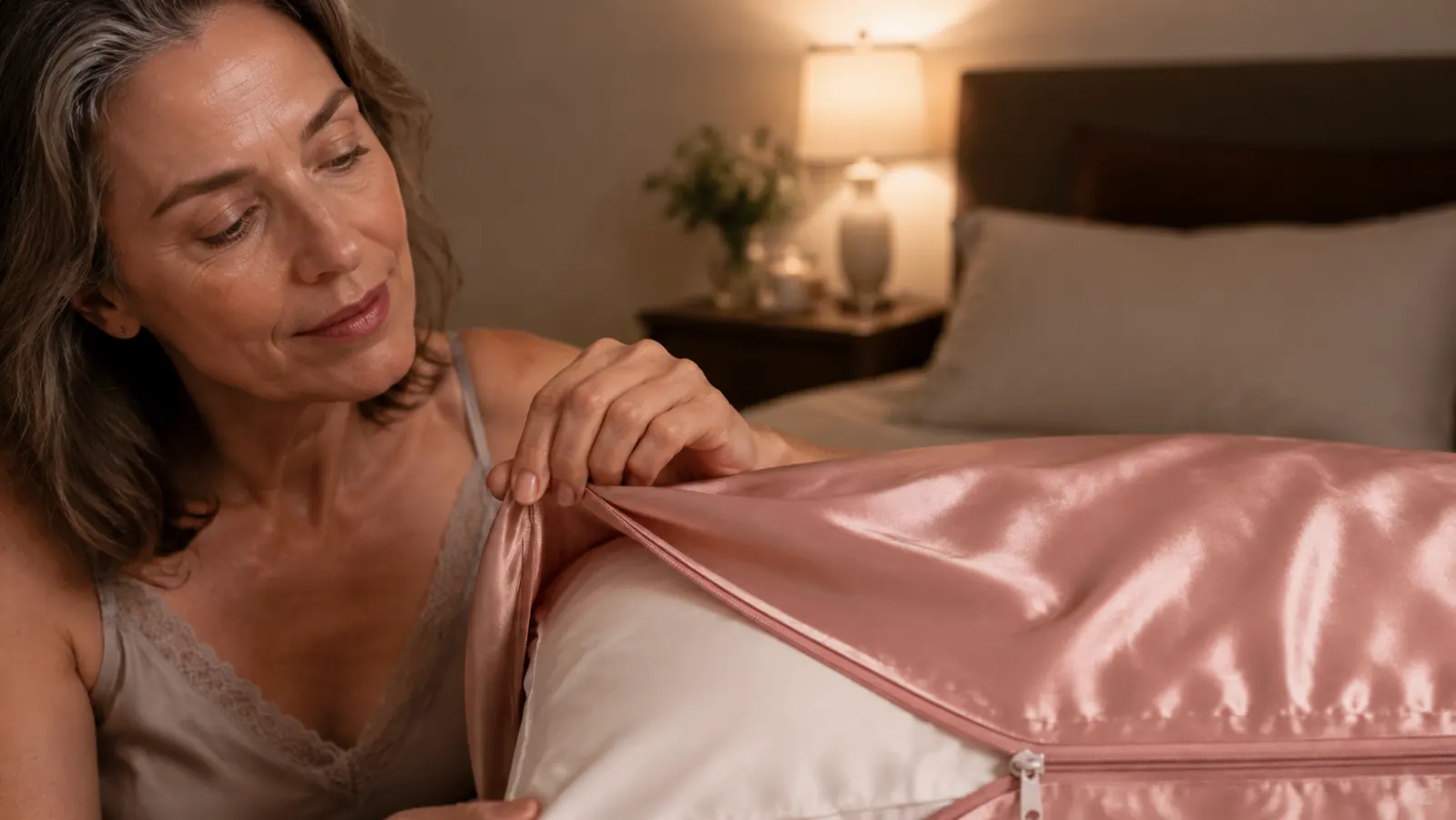
The case has a zippered opening rather than an envelope closure, which I liked immediately because it doesn't bunch or slide off the pillow the way cheaper satin ones I'd tried used to by 3 a.m. It's 21 momme, which I've since learned means a denser, more durable weave than the thinner 12 to 16 momme pillowcases that show up in a lot of gift sets and wear out within a few months.
I work long, physically demanding shifts, often twelve hours on my feet helping clients in and out of bed, so by the time I lie down myself I'm not gentle about it. I toss the pillow around, I sleep with my face mashed into it some nights and propped up on my arm other nights, and the Ravmix case has held up to all of that without snagging or pilling, which is more than I expected from something this thin.
The Fabric and the Momme Question
Before buying, I'd read that momme count roughly measures the density and weight of silk, and that higher isn't automatically better past a certain point, it's more about durability and feel. At 21 momme, this case feels substantial, closer to a light blouse than the flimsy, almost see-through silk I remember from a much cheaper case that unraveled at the seam within two months.
What I noticed most in the first two weeks wasn't dramatic. It was that my face wasn't sticking to the fabric the way it does on cotton, especially on the drier winter nights when static and cling seem to get worse. Cotton grips your skin as you move in your sleep, which creates friction, and that friction is exactly what folds skin into a crease overnight and tugs at hair strands until they tangle and break.
The silk lets your face and hair glide across the surface instead of catching on it, which sounds like a small thing until you've spent years waking up with a line across your cheek that used to take until nearly lunchtime to fully smooth out. I didn't feel the difference so much as I noticed the absence of a problem I'd stopped questioning.
What Changed With My Sleep Lines by Month Three
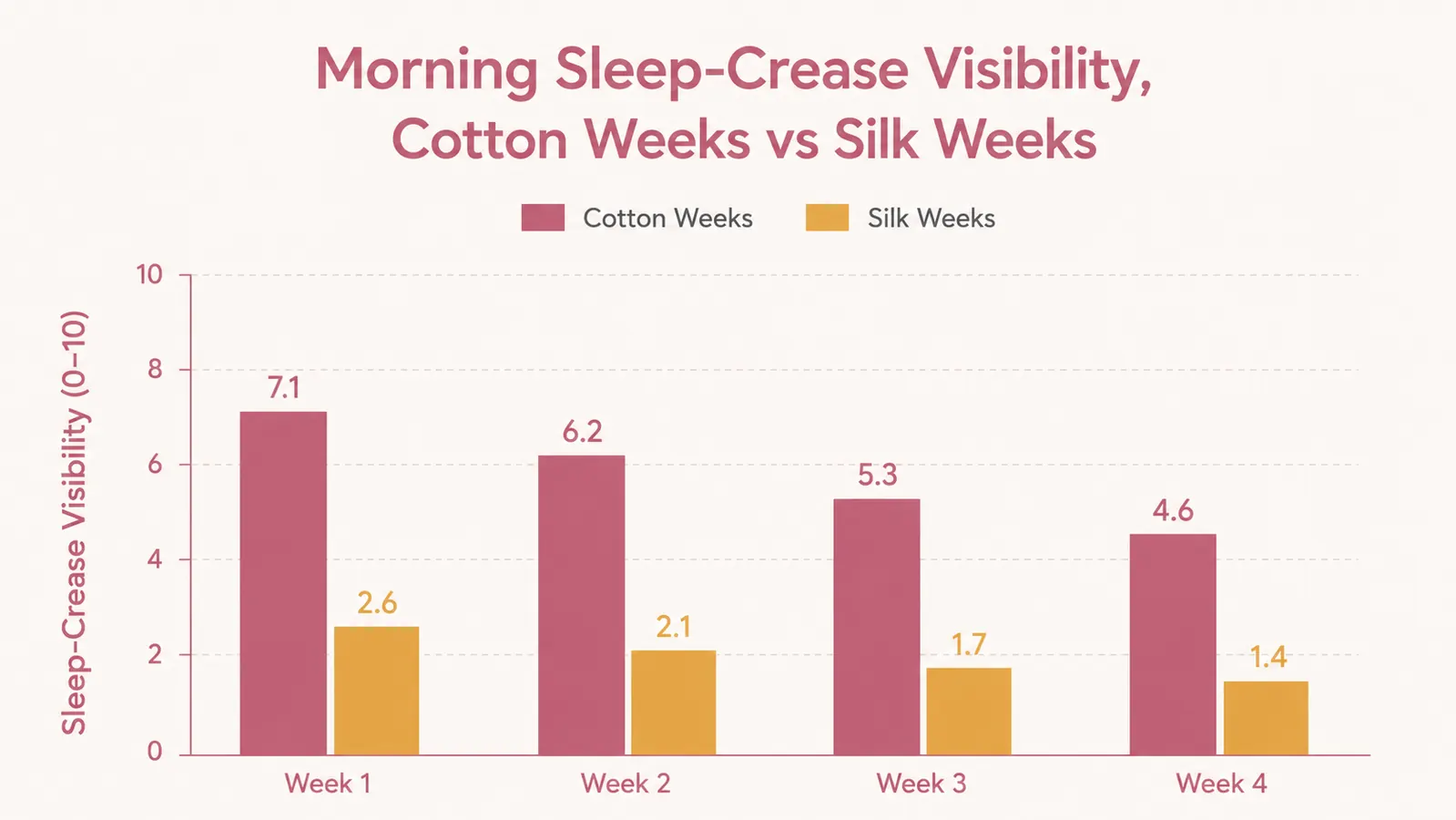
By the end of week three, the crease along my left cheek was fading faster in the mornings, closer to twenty minutes instead of the hour or two it used to take. I started taking a quick phone photo most mornings in the same bathroom light, and looking back from week one through month three, the change is gradual but real, more a steady softening of a line that used to be sharp enough that a coworker once asked if I'd slept on a wrinkle in my sheets.
By month three, the deep crease had mostly stopped forming at all on nights I slept well and didn't press my face too hard into the pillow, though it still showed up faintly on the nights I fell asleep exhausted after a long shift and didn't move much through the night. That distinction mattered to me. It told me the pillowcase was reducing friction and pressure, not somehow erasing the mechanics of sleeping on your side for eight hours.
Around month four, my sister, who I see maybe once a month, mentioned my skin looked less puffy and less lined in the morning specifically, not overall, which told me someone noticed something real. I want to be honest that this isn't a change that fixes established wrinkles or turns back years. It's a change that stops a temporary sleep crease from becoming the first thing people notice about your face before 9 a.m.
My Hair, and the Frizz Question
The hair change surprised me more than the skin change did. Within the first two weeks, I wasn't waking up with the same tangled, frizzy mess at my crown and ends that used to take a wide-tooth comb and several minutes of patience before I could style it for a client visit. My hair is thinning slightly, as a lot of women's does in their fifties, and I'd noticed more breakage than I liked whenever I brushed out overnight tangles.
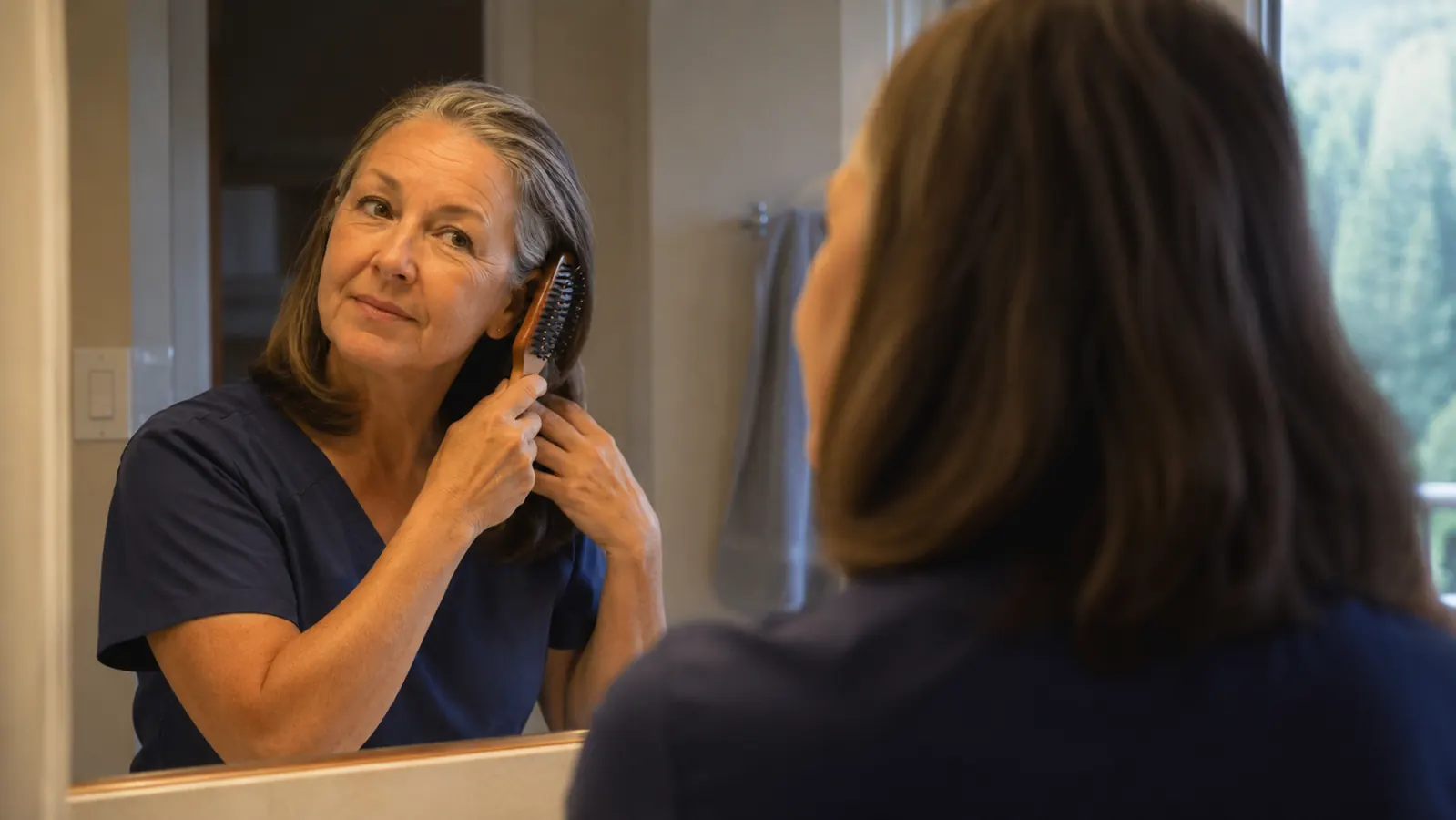
On the silk case, my hair simply moves less against the surface overnight, so it isn't getting yanked and knotted the way it does against cotton fibers, which grab and hold hair strands as you shift positions. By month two, I was brushing out my hair in under a minute most mornings, down from what used to be closer to five, and I noticed visibly less hair in my brush afterward, which I track partly because thinning hair makes you pay closer attention to that kind of thing.
My frizz, especially the flyaways along my hairline that no amount of serum ever fully tamed, also calmed down noticeably. I still get some frizz on humid Spokane summer nights, silk isn't magic, but the baseline overnight damage that used to compound day after day has clearly eased off, and my ends look less split when I check them under good bathroom light than they did six months ago.
Washing and Care Over Six Months
This is the part nobody warned me about clearly enough before I bought it. The Ravmix case needs gentler handling than a regular pillowcase. I wash mine roughly every one to two weeks on a cold, gentle cycle inside a mesh laundry bag, and I never put it in the dryer, I lay it flat on a towel in my bathroom to air dry instead, which takes most of a day depending on the season.
I ruined the first silk pillowcase I ever owned by tossing it into a regular hot wash with towels, so I was careful with this one from day one. Six months in, the color hasn't faded and the fabric hasn't thinned or developed the rough texture cheaper silk sometimes gets. I did have one small snag near the zipper pull after catching it on a fingernail, a reminder that this fabric isn't as forgiving as cotton.
I also learned to keep skincare products applied and mostly absorbed before lying down, since heavier creams or oils can leave marks on silk that don't come out as easily as they would with cotton. That adjustment took a few weeks to become habit, but it's a minor one compared to what I was getting in return.
Tradeoffs I Didn't Expect
The washing routine is more effort than tossing a cotton pillowcase in with the rest of my sheets, and on weeks when laundry piles up because of a rough work schedule, I've had to fall back to a spare cotton case for a night or two, which is when I notice the crease and the tangling creep right back in. That contrast has been its own kind of proof that the silk is actually doing something, not just a placebo I've talked myself into.
It also runs slightly cooler and more slippery than cotton, which took some getting used to. My pillow shifted more than usual the first week or two before I got used to how it moves under my head, and I noticed it more on nights I was restless. It's a small adjustment, but worth mentioning since it's not something most product descriptions bring up.
There's also the fact that this isn't a fix for deeper, already-established wrinkles or significant hair damage from years of heat styling and coloring, which I've done plenty of over the decades. It reduces the nightly friction that makes existing issues worse. It doesn't reverse damage that's already there, and I don't think anyone selling one of these should imply otherwise.
What I Considered Instead
Before buying the Ravmix, I looked at satin pillowcases, cheaper and more widely available at big box stores. I tried one for about a month years ago and the difference was noticeable almost immediately, it pilled within a few washes and felt slick in a way that made my pillow slide more, without giving me the same reduction in morning creasing I'm getting now.
I also considered just changing my sleep position, which several articles suggested as a free alternative to sleeping on your back instead of your side. I tried that for about two weeks and woke up with a stiff neck most mornings, plus I simply couldn't stay on my back through a full night no matter how many pillows I propped around myself. For me, changing the fabric I was sleeping on turned out to be a far more realistic habit to maintain than trying to retrain thirty years of sleep position.
What I Liked
- Noticeably faster fading of morning sleep creases within the first three weeks
- Less overnight hair tangling and visibly reduced breakage in my brush by month two
- 21 momme weave has held up to six months of rough nightly use without pilling or snagging
- Zippered closure stays in place better than the envelope-style cases I've tried before
Where It Falls Short
- Requires gentle, cold hand or machine washing and air drying, not a toss-in-with-the-towels case
- Runs slippery and cooler than cotton, which took a week or two to adjust to
- Won't reverse existing deep wrinkles or years of heat-styling hair damage
- One small snag developed near the zipper after six months of use
I didn't feel the difference so much as I noticed the absence of a problem I'd stopped questioning.
Who This Is For
I'd recommend the Ravmix silk pillowcase to women in their forties and fifties who wake up with a visible sleep crease that takes a while to fade, or whose hair gets more tangled and brittle overnight than it used to. It suits someone willing to handle a slightly gentler laundry routine in exchange for a low-effort habit, since you just sleep the way you already do. Several women I care for around Spokane have asked about mine, and I'd point side-sleepers toward it especially, the ones who've noticed the same morning crease I used to dismiss as normal.
It's also a good fit if you're the type who wants a change that works passively while you sleep rather than adding another product or device to an already crowded routine. For me, that was the real appeal, it asked almost nothing of me beyond washing it properly every couple of weeks.
Who Should Skip It
If you're hoping this will noticeably soften wrinkles already set into your skin, or repair hair heavily damaged by years of coloring and heat tools, I'd rather tell you plainly that a pillowcase isn't going to get you there. I'd also skip it if you won't keep up with the gentler wash and air-dry routine, since a hot dryer will shorten its life fast. If you toss and turn heavily or sleep with a partner who pulls the pillow around, the slipperier surface might take longer to adjust to than it's worth for you.
Six Months In, I'm Not Going Back to Cotton
I didn't expect a pillowcase to change my mornings, but the faster-fading sleep creases and the calmer hair were real enough that I've kept it in rotation past the six-month mark. If you want to check current pricing and availability, here's where I look.
Amazon Check Today's Price on Amazon →