

Short answer: if you can only buy one, get the real mulberry silk. I switched from a satin pillowcase to a Ravmix 100% mulberry silk pillowcase eight weeks ago, and the difference showed up on my face before it showed up in my sleep. My name is Diane Whitfield, I'm 54, and I've worked as a home care provider around Spokane for eleven years. Between overnight shifts and my own perimenopausal skin drying out faster than it used to, I needed to know if silk was worth the switch or if satin was doing the same job for less.
So I ran them side by side. Same pillow, same laundry schedule, same bedroom, alternating cases every few nights so I wasn't comparing a fresh case to a worn one. What I found is that they look similar in a store bin and feel almost the same to a rushed hand, but they behave very differently against skin that's already lost some of its bounce.
How I Ended Up Comparing These Two
I'd been on a satin pillowcase for about three years, the kind you find in a two-pack at a big box store for not much money. It felt fine. Slippery enough, cool enough, nothing to complain about until I started noticing a crease that ran diagonally across my left cheek most mornings, right where my face met the pillow. It faded by lunchtime at first. By 53 it was sticking around until early afternoon.
A client's daughter, a nurse who works nights, mentioned she'd switched to real silk after her dermatologist brought up sleep creasing at an appointment. That sent me down a rabbit hole of reading labels, and that's when I learned satin and silk are not the same material wearing two different names. Satin is a weave. Silk is a fiber. You can have satin made from polyester, and most affordable satin pillowcases are exactly that.
I'll admit I almost talked myself out of buying real silk. Seventeen dollars for a pillowcase felt silly for something I'd been getting from a two-pack for a fraction of that. What changed my mind was doing the math on how many nights I actually sleep on the thing, roughly 350 a year, which made a single pillowcase feel less like an indulgence and more like a very cheap nightly habit if it actually worked.
What's Actually Different Between the Two
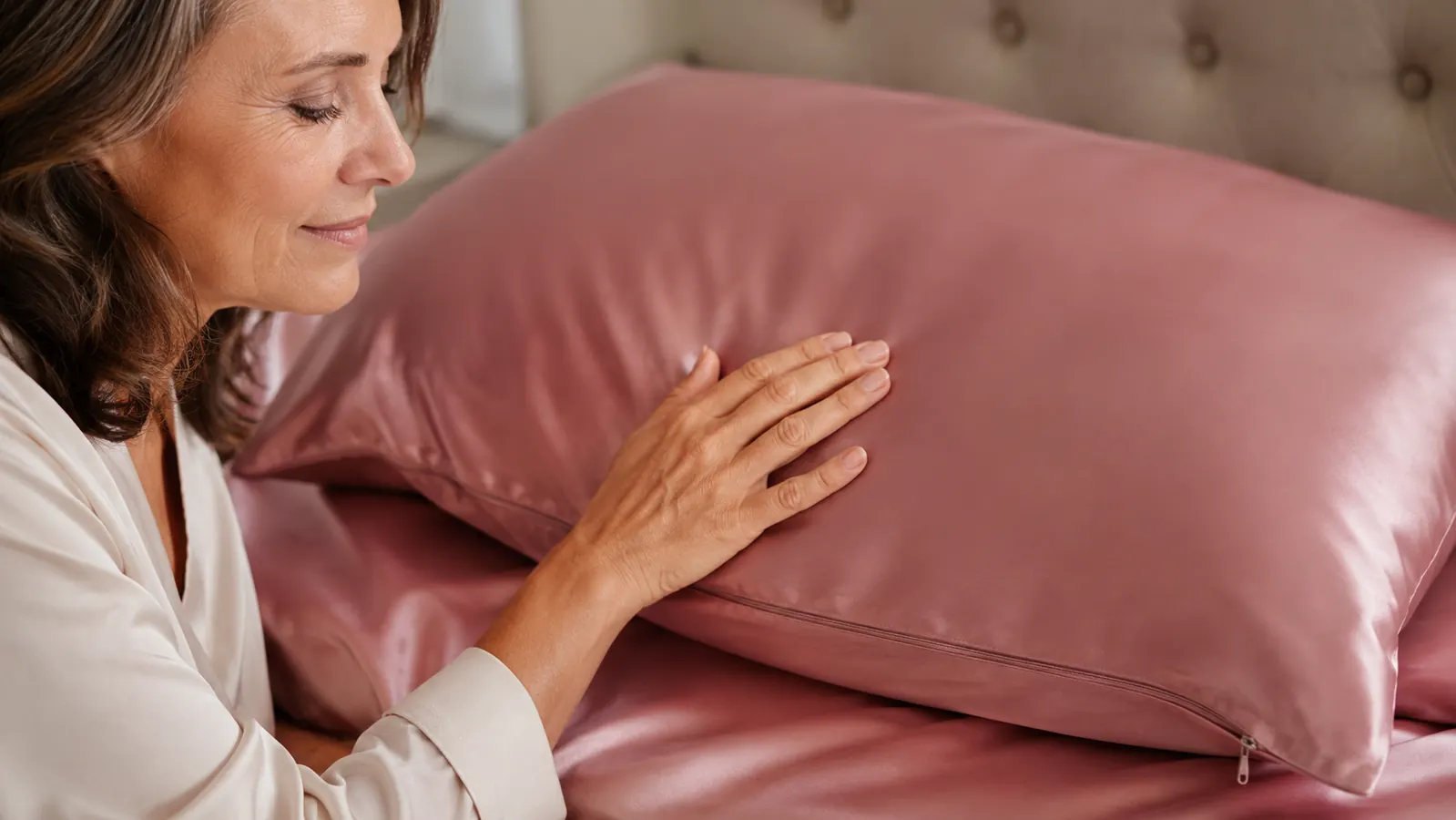
The Ravmix pillowcase I bought is 21 momme mulberry silk, meaning it's woven from the fiber that silkworms actually produce, not a synthetic that mimics silk's shine. Mulberry silk fibers are smoother and rounder than polyester fibers, which is why real silk creates noticeably less friction against skin and hair. That lower friction is the whole reason silk gets recommended for sleep creasing and frizz in the first place.
Satin pillowcases, on the other hand, are almost always made from polyester or a poly-blend that's woven in a satin pattern to get that glossy look. The weave gives it a similar sheen to silk from across the room, but the fiber underneath is plastic. Polyester doesn't breathe the way a natural protein fiber does, and it holds onto heat differently, which matters more than people expect once you've slept hot for a few nights in a row.
How I Tested Them
For eight weeks I alternated the Ravmix silk case and my old satin case every four to five nights, same pillow insert, same laundry detergent, same bedroom that runs warm in the summer since our upstairs doesn't have much airflow. Each morning I took the same angle photo in the same bathroom light and rated my cheek crease on a scale of zero to five, zero being nothing visible and five being a deep line still there at breakfast.
I also tracked how my hair looked, since I sleep with it loose most nights, and I kept a rough note of whether I woke up too warm. None of this was lab-grade, it was one 54-year-old woman with a phone camera and a notebook, but the pattern was consistent enough by week three that I stopped needing the photos to know which case I'd slept on.
| Mulberry Silk | Satin (Polyester) | |
|---|---|---|
| Material | 21 momme 100% mulberry silk, natural protein fiber | Woven polyester or poly-blend, synthetic fiber |
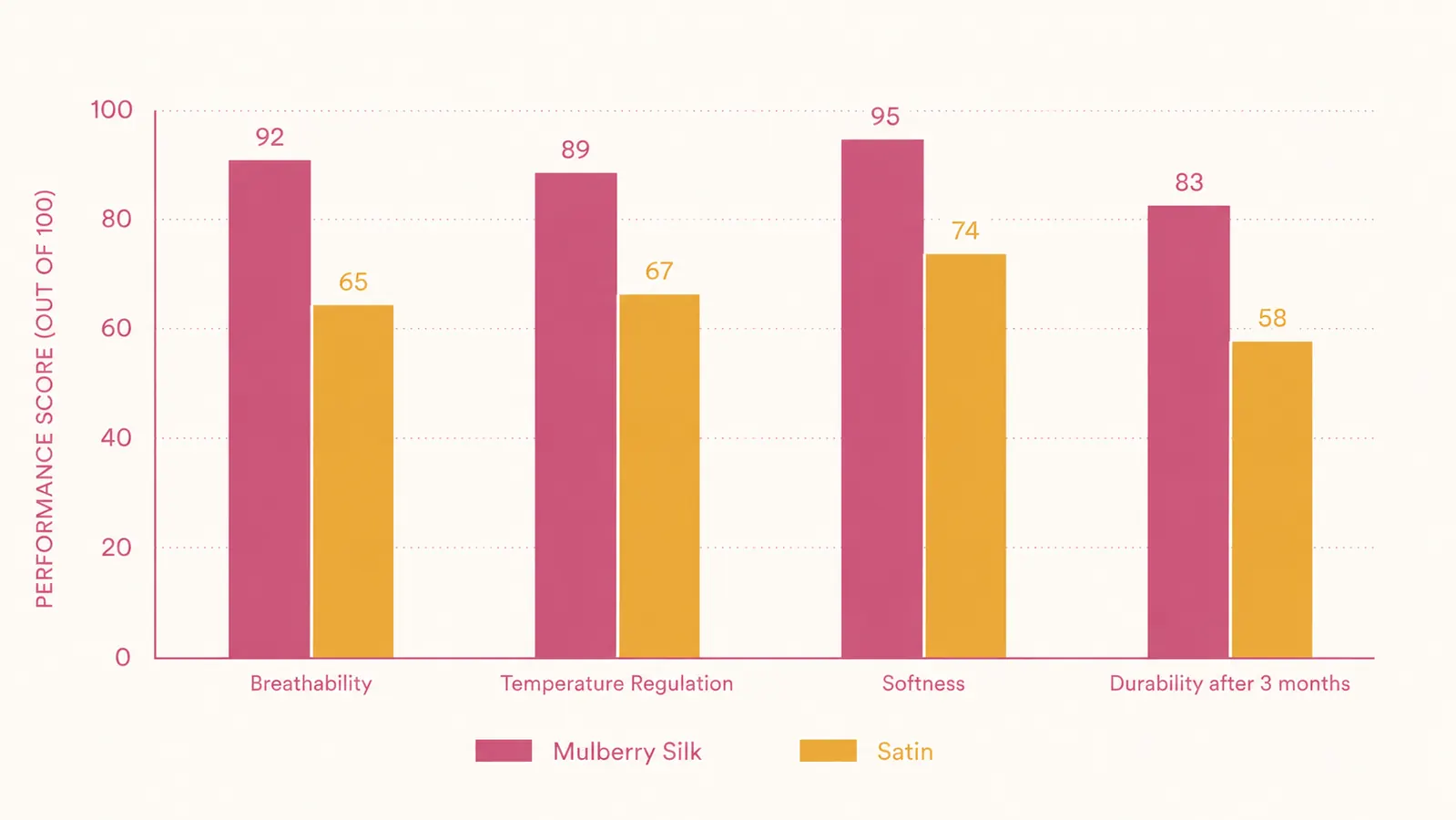
| Breathability | Breathes well, natural fiber regulates surface moisture | Traps more heat, synthetic fiber doesn't breathe as well |
| Skin benefit | Low friction reduces overnight crease lines and pulling | Some friction reduction, less than real silk, morning creasing still visible for me |
| Hair benefit | Noticeably less frizz and static, hair slides instead of catching | Mild reduction in frizz, some static still present |
| Temperature regulation | Stayed cooler through warm nights in my testing | Ran warmer, I woke up damp at the hairline twice during a heat wave |
| Durability | Held sheen and smoothness through weekly washing over 2 months | Started pilling slightly by week 5 of the same wash schedule |
| Care | Gentle cycle or hand wash, cool water, no dryer heat | Machine washable, more forgiving of a normal wash cycle |
| Best for | Anyone dealing with sleep creasing, frizz, or hot nights | Someone who wants a similar look on a tighter budget and isn't chasing skin or hair benefits |
Where the Ravmix Silk Wins
The crease line was the biggest difference. On satin nights my rating hovered between a 3 and a 4 most mornings, a visible diagonal line that took until early afternoon to fully release. On silk nights it dropped to a 1 or a 2 within the first two weeks, and by week five I was mostly seeing a faint pink line that was gone within twenty minutes of getting up. That's not nothing when you're 54 and every line has a harder time bouncing back than it did at 34.
The temperature difference surprised me more than the skin difference. We had a stretch of warm nights in July, and on the satin case I woke up twice with damp hair at my hairline. On the Ravmix silk case, same room, same ceiling fan setting, I didn't have that problem once. Real silk fiber has a different moisture and heat behavior than polyester, and I felt it directly rather than reading about it somewhere.
Where Satin Actually Holds Its Own
I'm not going to pretend satin is useless. If your main goal is just getting off cotton, which does pull at skin and hair the most of any common pillowcase fabric, a satin case is a real upgrade and costs less than mulberry silk almost everywhere I looked. For someone on a tight budget, or someone testing whether this whole 'sleep on something smoother' idea is even worth pursuing before spending more, satin is a reasonable first step.
Satin also held up fine for regular machine washing without the extra care that silk wants. I could throw it in with a normal load and not think twice, where the Ravmix case needed a gentler cycle and cool water to keep its sheen. If your laundry routine doesn't allow for babying one pillowcase, that's a real point in satin's favor, even if the results underneath aren't quite as strong.
The crease line that used to last until lunch now fades before I finish my coffee.
The Ravmix 21 momme mulberry silk pillowcase is the one I kept using after the test ended. It comes with a hidden zipper closure so it stays put on the pillow all night, and it's the same case I've now used for eight weeks straight.
Amazon Check Today's Price on Amazon →What My Skin and Hair Actually Did Over Two Months
By week six on the silk case, my husband Tom actually asked why my hair looked less frizzy in the morning without me bringing it up first. I'd been tying it back less because it wasn't tangling against the pillow the way it did on satin. My skin still creases some, I'm 54 with skin that's thinner than it used to be, but the depth and duration of the crease dropped enough that I noticed it in photos I took for work ID renewals, not just in my own mirror.
The one thing I'll say plainly is that neither pillowcase erased fine lines that were already set into my skin. This isn't a wrinkle treatment, it's friction reduction. What it did was stop new overnight creasing from adding on top of what's already there, and it kept my hair from getting roughed up against the fabric all night. That's a meaningful difference over months, but it won't undo years of sun exposure or lost collagen, and I'd tell anyone that straight.

What About Cost Over Time
Satin pillowcases are cheaper up front, often sold in two-packs for less than a single silk case, and that matters if you're testing the whole idea for the first time. But I replaced two satin cases in the three years before I switched, since they'd pill and dull enough that I didn't want them on my face anymore. The Ravmix case is still going strong after two months of weekly washing with no sign it needs replacing soon.
So the real comparison isn't just what you pay today, it's what you pay over a year or two of actual use. A silk case that holds up for a long stretch and does more for your skin and hair ends up costing less per night than replacing a satin case every year or so. That math won't matter to everyone, especially if budget is tight right now, but it's worth having in the back of your mind before you assume satin is automatically the cheaper choice.
Who Should Buy Which
If you're dealing with visible morning crease lines, dry or frizzy hair, or you run hot at night, the mulberry silk is worth the switch. It's a small daily habit change with a real, trackable result, and once you've felt the temperature difference on a warm night you won't want to go back. If you're just moving off cotton for the first time, want a lower cost entry point, or your laundry routine can't accommodate a gentler wash cycle, a satin case is a fair stepping stone. Just know you're getting part of the benefit, not all of it. I'd also add this: if you already own a satin case and it's working fine for you, you don't need to feel behind. This is a comparison of two decent options, not a case of one being fake and the other being real. Silk simply did more, in my own eight weeks of tracking it, for the two things I cared most about, which were the crease on my cheek and the frizz in my hair.
The crease used to outlast my coffee. Now it's usually gone before I've poured a second cup.
Care and Durability After Two Months of Washing
I washed the Ravmix case on a gentle cycle in cool water and hung it to dry, which is what the care tag recommends, and after eight weeks it still has the same smooth hand feel and sheen it started with. No pilling, no snags, and the zipper closure hasn't caught or frayed despite going through the wash roughly once a week.
My old satin case, by comparison, had started to pill slightly along the seam by week five of a similar wash schedule, and the sheen had dulled in a way that made it look more matte than glossy under bathroom light. Satin's synthetic fibers don't hold up quite the same way over repeated washing, especially if it ever ends up in the dryer on a warm setting, which mine did more than once before I started paying closer attention.
Two months in, this is the case actually still on my pillow.
If you want the version that held up in the wash and did the most for both my skin and my hair, this is the Ravmix mulberry silk pillowcase I tested and kept.
Amazon Check Today's Price on Amazon →